


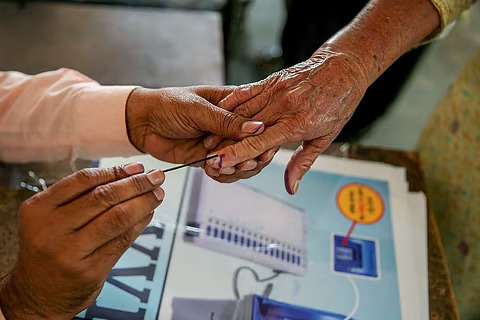

The recent single-phase Assembly elections held on April 9 2026, in Assam, Keralam, and Puducherry have drawn considerable attention due to high voter turnout. As reported by the Election Commission, Puducherry led the regions with an impressive turnout of 89.20 per cent, followed closely by Assam at 85.10 per cent and Keralam at 77.50 per cent. The significant participation underscores the electorate’s engagement in the democratic process across these states.
The elections saw a large number of voters taking part, eager to exercise their right to vote. Prominent political figures such as Assam Chief Minister Himanta Biswa Sarma and Keralam Chief Minister Pinarayi Vijayan were among the first to cast their votes, reflecting the importance of these elections. Voting concluded without major incidents, allowing officials to proceed with the counting process scheduled for May 4.
Details of Voter Demographics
In Keralam, a considerable electorate of over 2.6 crore individuals was eligible to choose from 883 candidates across 140 constituencies. The state had a total of 2,69,53,644 registered voters, which included 1,38,27,319 women and 1,31,26,048 men. Additionally, there were 277 voters identified as third-gender. This diverse representation highlights the inclusive nature of the polling process in Keralam.
The participation also included younger voters, with nearly 4,24,518 individuals aged 18-19 casting their votes. Furthermore, 2,04,608 voters were aged 85 years and older. To facilitate the voting process, officials established 30,471 polling stations, ensuring accessibility and security for all voters. In this election, the United Democratic Front (UDF) aimed to challenge the current ruling Left Democratic Front (LDF), which has governed for the last decade, while the Bharatiya Janata Party (BJP) sought to expand its influence in the state.
In Assam, the electorate consisted of over 2.5 crore individuals participating in the elections for the 126-member legislative assembly. A total of 2,50,54,463 electors were registered, with 1,25,31,552 identified as male and 1,25,22,593 as female, alongside 318 transgender voters. The elections were characterized by a contest primarily between the Bharatiya Janata Party (NDA) and the Congress-led alliance, amidst a backdrop of political tensions.
Puducherry’s Electoral Landscape
Puducherry also reported significant voter engagement, with 10,14,070 individuals eligible to vote for 30 legislative assembly seats. Among the eligible voters, 5,39,125 were female, 4,74,788 were male, and 157 identified as third-gender. Furthermore, 24,156 voters belonged to the 18-19 age group, indicating a substantial interest from the youthful population in the electoral process.
The electoral scenario in Puducherry featured the ruling National Democratic Alliance (NDA), which includes the All India NR Congress and the BJP, facing off against the Congress-DMK alliance. Additionally, actor Vijay’s Tamilaga Vettri Kazhagam (TVK) intended to introduce a triangular contest in the region. This diverse electoral environment in Puducherry reflects a competitive political landscape as the electorate looks to make strategic choices in the upcoming elections.
The high voter turnout across these states highlights a robust democratic engagement among citizens. As the counting of votes approaches, the political parties are gearing up for a potential reflection of the electorate’s preferences and priorities, which could reshape the political landscape in these regions.