


Study Confirms Water Ice on Moon Found More Stable Than Expected
The CSR Journal Magazine

A recent study has confirmed that water ice in the Moon’s permanently shadowed regions (PSRs) is more stable than earlier estimates suggested. This significant finding has emerged from collaborative research involving the Physical Research Laboratory (PRL) and the Indian Institute of Science Education and Research (IISER). Published in the journal Nature, the study sheds light on the conditions within the Moon’s south polar area, where temperatures can drop below minus 160 degrees Celsius and craters remain shrouded in darkness.

The PSRs are of great interest for future lunar exploration missions, including NASA’s Artemis programme and upcoming expeditions led by ISRO. Understanding the behaviour and stability of ice deposits in these shadowed regions is critical for planning human activities on the Moon.

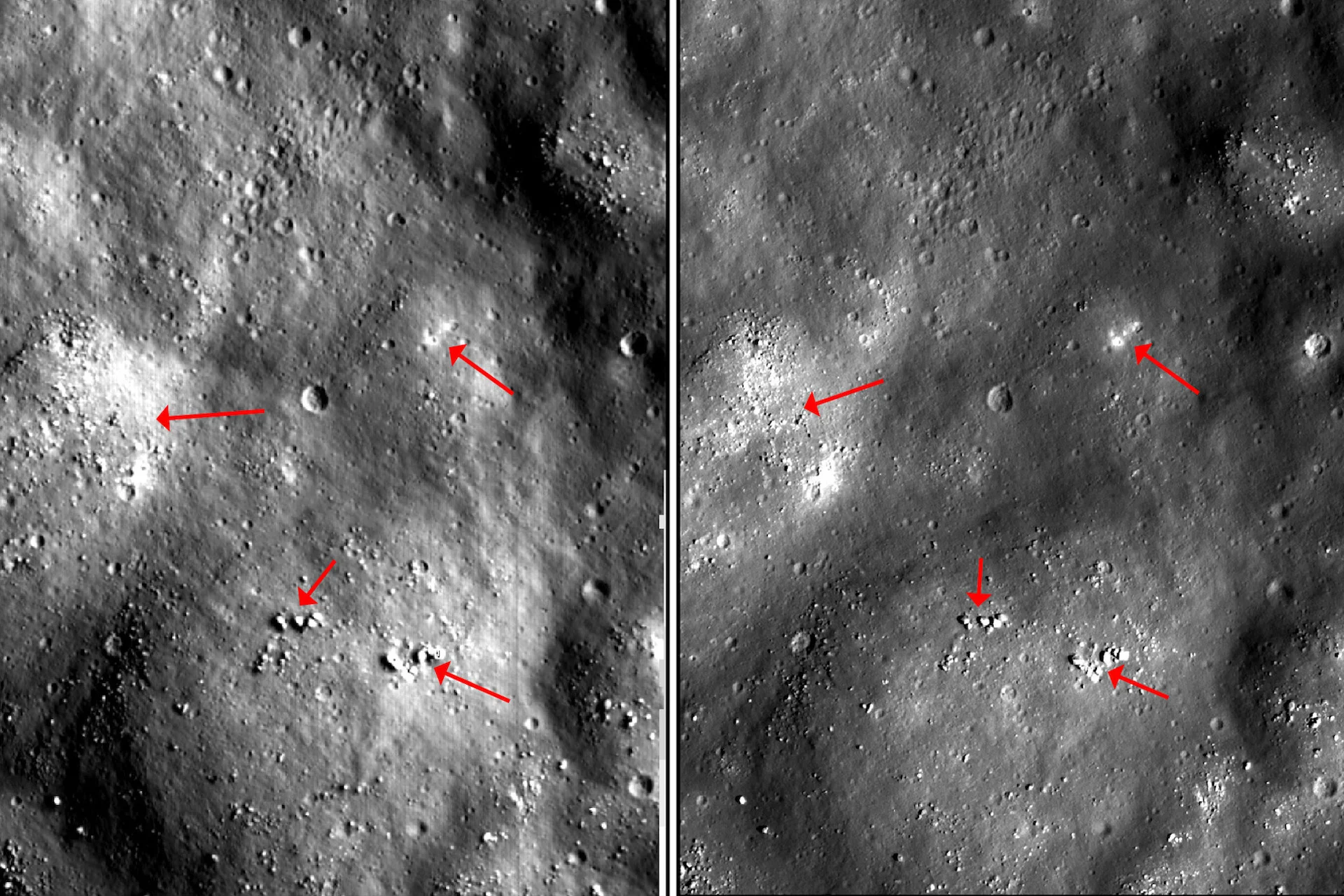
The research team utilised high-resolution orbital imagery and impact modelling techniques to analyse millions of small craters, ranging in size from one to 20 metres, in the PSRs situated between 85 and 90 degrees south latitude. This comprehensive mapping provided insights into the historical impact events that shape the lunar surface.

Effects of Micrometeorite Impacts

Initially, micrometeorite impacts were believed to significantly disrupt the stability of water ice by disturbing the surface layer and promoting sublimation. However, the new study challenges this notion, revealing that approximately 74 per cent of the PSRs remain largely unaffected by such impacts. This suggests that the ice deposits could endure over extended periods without substantial disturbance.

While localised alterations due to micrometeorite strikes do occur, their overall impact on large ice reservoirs appears to be limited. The researchers concluded that this resilience offers a promising outlook for exploiting the Moon’s water resources. It was indicated that impacts might even have a positive effect by exposing deeper layers of ice, making it more accessible for future lunar missions.

The study highlighted that areas devoid of significant cratering may allow natural surface processes, termed “gardening,” to bring ice layers closer to the surface. This vertical mixing could make such locations prime targets for future exploration efforts.

International Collaborations Strengthen Lunar Research

The research underscores the importance of global collaboration in lunar exploration, integrating data from various international missions, including India’s Chandrayaan-2. Advanced simulation techniques further contributed to the investigation, enhancing the understanding of the Moon’s icy reserves.

For India, these findings bolster the scientific rationale for forthcoming lunar missions and highlight its evolving role in planetary research. As space agencies worldwide accelerate their plans to explore the Moon’s south pole, the study provides valuable assurance that lunar ice may be more consistent and plentiful than previously anticipated.

The implications of the stable ice deposits are profound. They could furnish essential resources for a sustained human presence on the Moon, enabling the provision of drinking water, breathable oxygen, and hydrogen fuel for space travel. This aligns with ambitious objectives of establishing a lunar base and facilitating exploration beyond the Moon.

Long or Short, get news the way you like. No ads. No redirections. Download Newspin and Stay Alert, The CSR Journal Mobile app, for fast, crisp, clean updates!

App Store –  https://apps.apple.com/in/app/newspin/id6746449540 

Google Play Store – https://play.google.com/store/apps/details?id=com.inventifweb.newspin&pcampaignid=web_share

Latest News

Popular Videos
