


Nearly 9 Million Voters Risk Exclusion from West Bengal Rolls Ahead of Polls
The CSR Journal Magazine

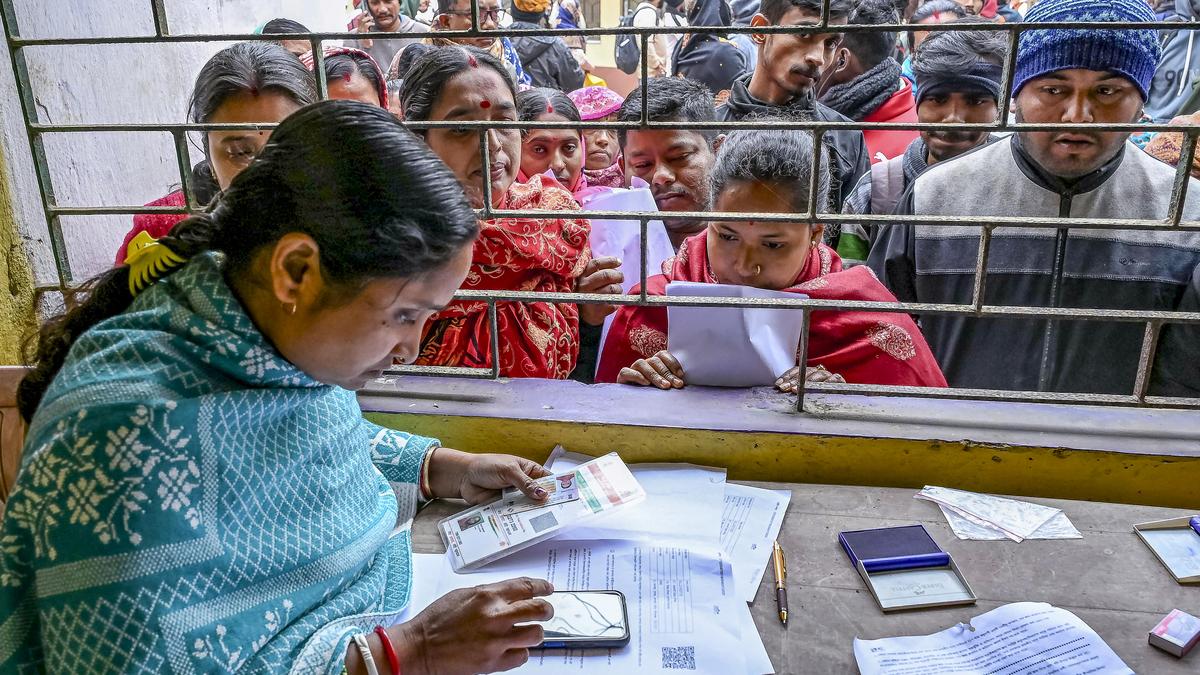
With less than one month remaining before the critical second phase of elections on April 29, uncertainty looms over millions of voters in West Bengal. Recent reports indicate that 2,716,393 out of 6,006,675 individuals flagged for review have been deemed ineligible. This situation has resulted in widespread unease, affecting nearly six million people who find themselves in a precarious legal position.

The five districts with the highest number of individuals reported as ineligible include Murshidabad, North 24 Parganas, Malda, South 24 Parganas, and Purba Bardhaman. The figures reveal significant distress in these areas, with Murshidabad leading with 455,137 names marked as ineligible and a total of 1,101,145 originally subject to action.

In South 24 Parganas, the figures further illustrate the gravity of the situation, showcasing not only the number of ineligible names but also the social fabric that is being strained as families grapple with the implications of these exclusions. The entire scenario paints a picture of bureaucratic failure that needs urgent attention.

Murshidabad: A District In Crisis

Mursidabad stands out as a focal point for discontent, characterised by deep-rooted tension among its residents. Families in villages such as Debipur, known for its educational achievements, are now conflicted over legal status and eligibility. Documented individuals are divided into categories, leading to significant emotional and psychological strain within households.

One notable case involves Abdul Bari, a member of the Border Security Force who has served honorably yet now faces questions regarding his own legal status. Local residents express concern, reflecting a crisis of confidence in governmental processes where even those entrusted with national security find themselves in questionable positions.

Activism has emerged in response, with local educated youth, led by figures like Ajijur Rehman, taking initiatives to assist affected citizens. They have established support desks in mosques to help individuals across various communities navigate the appeal processes, focusing on unity and secular identity amid escalating fears of communal division.

Bhabanipur: The Heart of the Controversy

The situation in Bhabanipur, the constituency of Chief Minister Mamata Banerjee, has reached a critical juncture. Despite the issuance of a supplementary list that covers approximately 3.2 million voters, physical voter lists are still unavailable at polling locations, leaving long-standing residents in an unsettling limbo.

Local residents, including individuals who have lived in Bhabanipur for generations, share distressing experiences involving administrative errors. For instance, Salim Ali Laskar, who has resided in the area for over 50 years, remains uninformed despite efforts to resolve a minor discrepancy. The implications for residents’ educational and employment opportunities are significant.

Subrata Gupta, a Roll Observer from the Office of the Chief Electoral Officer, stated that certain voter rolls remain unpublished because required judicial approvals are still pending. This delay further exacerbates the existing tensions and uncertainty faced by the electorate.

Political Repercussions

Prime Minister Narendra Modi has publicly criticised the Trinamool Congress (TMC), claiming their opposition to the election processes is intended to protect illegal immigrants. During a recent visit, he asserted that the TMC views these individuals as a vote bank, thus creating a political divide regarding the Special Intensive Revision.

In contrast, Chief Minister Mamata Banerjee defended her party’s actions, indicating that her interventions have led to the inclusion of 3.2 million previously excluded individuals. Her arguments highlight discrepancies in the electoral roll adjustments that have left thousands in uncertainty.

The Sabar Institute, which has analysed these political developments, raises concerns about possible discriminatory practices in the exclusion process, especially against Muslim voters. Claims of disproportionate targeting have emerged, indicating a need for transparency and accountability in the electoral roll verification process.

Long or Short, get news the way you like. No ads. No redirections. Download Newspin and Stay Alert, The CSR Journal Mobile app, for fast, crisp, clean updates!

App Store –  https://apps.apple.com/in/app/newspin/id6746449540 

Google Play Store – https://play.google.com/store/apps/details?id=com.inventifweb.newspin&pcampaignid=web_share

Latest News

Popular Videos
