


Menstrual Exclusion in Temples: ‘Women Not Untouchable for 3 Days’, Justice Nagarathna in Sabarimala Hearing

The CSR Journal Magazine

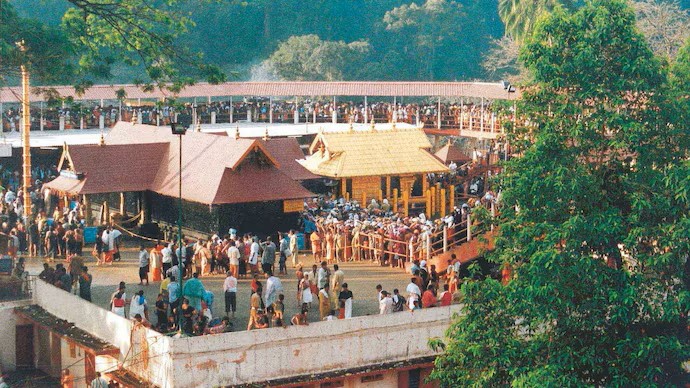
The Supreme Court is currently deliberating the Sabarimala case, raising crucial questions about menstrual exclusion from temples. Justice BV Nagarathna, the sole woman judge on the nine-judge Constitution Bench, commented that Article 17, which prohibits untouchability, cannot be selectively applied to women based on their menstrual cycles. She emphasised that it is unacceptable to consider women untouchable for three days a month only to permit their entry on the fourth day.

During the proceedings, Justice Nagarathna expressed her concerns over the discriminatory practices, suggesting that such exclusion conflicts with constitutional principles advocating equality. Her remarks came in response to Solicitor General Tushar Mehta, who objected to characterising the exclusion as akin to treating women as untouchables, a perspective that he found deeply objectionable.

The discussion highlights a significant clash between constitutional rights and religious practices. Justice Nagarathna reiterated that the provisions of Article 17 should apply uniformly and not be subject to time-bound interpretations, particularly in relation to women attending places of worship.

Solicitor General’s Defence of Temple Practices

Solicitor General Tushar Mehta opened his arguments by establishing that the restrictions at Sabarimala pertain not to menstruation but to a specific age demographic. He clarified that he was not addressing the issue of menstruation directly. Additionally, Mehta stated that the temples dedicated to Lord Ayyappa across the nation generally admit women, except for the Sabarimala temple, which he identified as a unique case.

Mehta further argued that the judicial examination of what constitutes essential religious practices should take into account fundamental principles established within the Constitution. He referred to earlier debates held by the Constituent Assembly concerning Articles 25 and 26, asserting that religious reforms fall under the jurisdiction of the legislature rather than the judiciary.

The Solicitor General maintained that the approach taken by the Supreme Court in the past regarding essential religious practices should be reconsidered. He indicated that the Court’s involvement in determining these practices could lead to inappropriate judicial overreach into religious matters.

Constitutional Questions and Future Implications

The Supreme Court’s nine-judge bench has embarked on examining crucial constitutional issues linked to religious freedom and legislative authority. Today’s hearings stemmed from a five-judge bench’s referral in 2019, which arose during ongoing review petitions against the 2018 ruling that had allowed women of all ages to enter Sabarimala temple, thus ending a long-standing prohibition.

This latest session is expected to clarify the boundaries of judicial authority concerning religious practices, specifically focusing on the constitutionality of tests created by the judiciary and the legislature’s role in religious reform. The outcome may set important precedents for similar cases across India, particularly those involving issues of religious freedom and legislative power.

Cumulatively, this examination of the Sabarimala practices could reshape the legal landscape of religious rights in the country. The proceedings signal a renewed commitment to addressing the complexities associated with the intersection of culture, law, and women’s rights, as well as the handling of reform within religious contexts.

Long or Short, get news the way you like. No ads. No redirections. Download Newspin and Stay Alert, The CSR Journal Mobile app, for fast, crisp, clean updates!

App Store –  https://apps.apple.com/in/app/newspin/id6746449540 

Google Play Store – https://play.google.com/store/apps/details?id=com.inventifweb.newspin&pcampaignid=web_share

Latest News

Popular Videos