


Artemis 2 Sets Record for Farthest Human Spaceflight in History
The CSR Journal Magazine

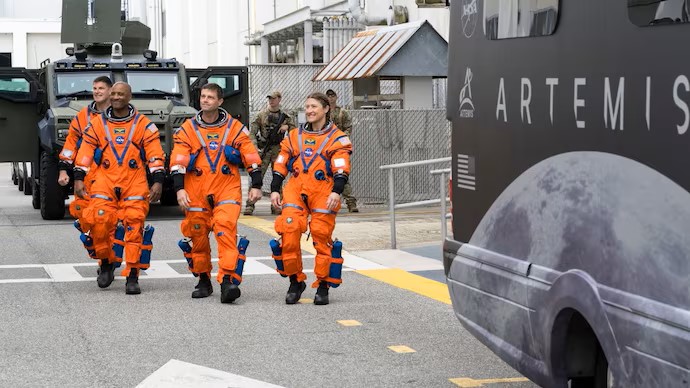
The Artemis 2 mission has entered the record books as the farthest human spaceflight in history. Launched on February 1, 2025, this mission marks a significant advancement in human space exploration, surpassing previous distance records achieved during earlier spaceflights. The mission aimed to build on the legacy of earlier Apollo missions while introducing new technologies and capabilities. Astronauts aboard the Orion spacecraft are currently on a trajectory that takes them farther from Earth than any crewed mission has travelled before.

Details of the Expedition

The Artemis 2 mission is part of NASA’s broader Artemis programme, designed to return humans to the Moon and eventually pave the way for future Mars exploration. This mission is notable not only for its distance but also for its crew composition, which includes a diverse team of astronauts from various backgrounds and nationalities. The mission is projected to last approximately 10 days, during which the crew will conduct various scientific experiments and gather data that could inform future lunar missions.

During the flight, the Orion spacecraft will traverse beyond the Moon, reaching distances that were previously only accomplished by robotic missions. The crew will also execute several manoeuvres to test the spacecraft’s systems and equipment in a deep-space environment. As part of NASA’s commitment to international collaboration, this mission incorporates contributions from multiple space agencies worldwide.

The launch itself took place at 8 am, marked by a countdown that culminated in a successful takeoff from the Kennedy Space Center in Florida. Enthusiasts gathered at the site and across the globe to witness this historic moment, showcasing a renewed interest in human space exploration. Various institutions and organisations have expressed their congratulations to NASA, highlighting the mission as a pivotal step toward humanity’s future in space.

Significance of the Journey

This mission not only sets a new distance record but also represents a critical step in NASA’s efforts to sustain human presence beyond low Earth orbit. The results obtained during this flight are expected to provide insights into the challenges of long-duration space travel, including radiation exposure and the psychological effects on astronauts. Understanding these factors will be essential for future missions aimed at Mars and beyond.

Furthermore, the Artemis 2 mission is positioned to enhance global collaboration in space exploration. By involving international partners, NASA seeks to foster alliances that can extend beyond lunar missions into future deep-space expeditions. The knowledge gained from this mission will not only propel NASA’s objectives but also inspire countries around the world to engage in collaborative efforts in space science and exploration.

As the mission progresses, updates regarding the crew’s activities and the data collected will be shared with the public and the scientific community. NASA has committed to transparency in its findings as it aims to contribute to a broader understanding of space travel’s potential and limitations.

Looking Ahead to the Future

The success of Artemis 2 sets a precedent for upcoming missions within the Artemis programme, including plans for a lunar landing that will occur in subsequent missions. By achieving this milestone, NASA is positioning itself as a leader in the new era of space exploration. The ongoing developments will undoubtedly generate further interest and investment in space science and technology.

With critical data and experience from Artemis 2, future missions such as Artemis 3 will benefit greatly, paving the way for a sustainable human presence on the Moon and ultimately, exploration of Mars. The legacy of this mission will likely influence space policy and international cooperation in unprecedented ways.

As the mission unfolds, the achievements of Artemis 2 will undoubtedly inspire future generations to pursue careers in science, technology, engineering, and mathematics, further sustaining the excitement and involvement in human space exploration.

Long or Short, get news the way you like. No ads. No redirections. Download Newspin and Stay Alert, The CSR Journal Mobile app, for fast, crisp, clean updates!

App Store –  https://apps.apple.com/in/app/newspin/id6746449540 

Google Play Store – https://play.google.com/store/apps/details?id=com.inventifweb.newspin&pcampaignid=web_share

Latest News

Popular Videos
