


Attack on Speaker Reflects Congress’s Efforts to Distract from Rahul Gandhi’s Performance: Amit Shah

The CSR Journal Magazine

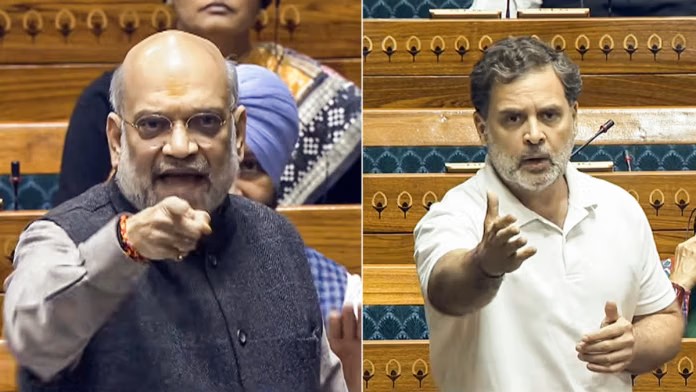
On Wednesday, Union Home Minister Amit Shah responded robustly to the Opposition’s actions in Parliament, particularly targeting Rahul Gandhi. Shah attributed the motion to remove Speaker Om Birla to the Congress party’s frustration over its electoral defeats and argued that the party’s shift to what he termed a “completely negative mode” aimed to undermine various institutions.

During his address at the end of a two-day Lok Sabha discussion, Shah portrayed the conflict as a distraction orchestrated by Congress. He suggested that this tactic was intended to divert attention away from what he described as Gandhi’s failure to fulfill his responsibilities as a parliamentarian, accusing the party of making the Speaker a scapegoat for its own shortcomings.

Official Figures and Parliamentary Conduct

In his remarks, Shah challenged the perspective of opposition members by referring to official statistics. He argued that Congress had been allocated considerably more speaking time during parliamentary sessions than warranted by its actual representation in the House as an opposition party. He contrasted this with what he characterized as Gandhi’s minimal engagement in parliamentary proceedings.

“It is misleading to claim he is not allowed to speak. The reality is he either does not wish to speak or struggles to adhere to Parliamentary rules,” Shah stated, amid persistent interruptions and protests from opposition lawmakers, who demanded an apology for his choice of words. Despite these disruptions, Shah maintained his stance and requested the acting Chairperson, Jagdambika Pal, to reconsider the usage of any terms deemed unparliamentary.

Concerns About Parliamentary Norms

Shah pointed out that Gandhi’s absence from crucial debates, including discussions surrounding the motion against the Speaker, underscored his lack of participation. The Home Minister noted that while the Constitution grants certain rights to members, it does not include special privileges. He emphasized that any belief in special entitlements was becoming increasingly disconnected from public sentiment.

Remarking that Parliament should not resemble a “mela” or fair, Shah highlighted the necessity for members to comply with established regulations. He attributed the suspension of several opposition MPs, including Gandhi, to their noncompliance with Parliamentary norms, specifically referencing Gandhi’s frequent allusions to unpublished materials from former army chief M M Naravane.

Shah’s Assessment of Gandhi’s Attendance

Amit Shah commended Speaker Birla for his leadership and inclusive approach, stating that he offered every member the opportunity to voice their opinions. He remarked that Birla had faced criticism yet chose to attend the proceedings after receiving a motion against him, maintaining a focus on the substance of parliamentary democracy.

Shah further questioned Gandhi’s parliamentary record, bringing attention to his notable absences during significant events such as the annual motion of thanks to the President and budget discussions. Shah remarked that Gandhi had frequently been absent not only from critical debates but also from his party’s political activities, suggesting that he had been abroad instead of engaging with constituents and party functions.

Long or Short, get news the way you like. No ads. No redirections. Download Newspin and Stay Alert, The CSR Journal Mobile app, for fast, crisp, clean updates!

App Store –  https://apps.apple.com/in/app/newspin/id6746449540 

Google Play Store – https://play.google.com/store/apps/details?id=com.inventifweb.newspin&pcampaignid=web_share

Latest News

Popular Videos