


app-store-logo
play-store-logo
December 28, 2025

Transport Ministry’s 2026 Agenda: Barrier-Free Tolling, Road Safety Bill Top Agenda
The CSR Journal Magazine

India’s road transport and highways ministry has outlined an ambitious and wide-ranging reform agenda for 2026, positioning the year as a watershed moment for the country’s highway ecosystem. At the core of this push are two priorities: the nationwide rollout of barrier-free tolling and the introduction of a new Road Safety Bill.

The urgency is driven by grim statistics, India continues to lose nearly 1.8 lakh lives every year to road accidents, despite steady expansion of highway infrastructure. Officials believe that a combination of technology-led toll reforms and stronger safety legislation can deliver meaningful reductions in fatalities while improving the overall driving experience.

Mega expressways near completion

Alongside policy reforms, 2026 is set to be a landmark year for physical infrastructure delivery. Several long-awaited expressway projects are nearing completion and are scheduled to be inaugurated next year. Chief among them is the 1,362-km Delhi–Mumbai Expressway, one of India’s most ambitious road projects, expected to be fully completed by November 2026.

Other major corridors include the Amritsar–Jamnagar highway by December, the Bengaluru–Chennai Expressway by June, the Ahmedabad–Dholera Expressway by March, the Indore–Hyderabad highway by May, and the Delhi–Dehradun Expressway by January. Together, these routes are expected to sharply reduce travel times, decongest existing highways, and boost trade, tourism and regional economic growth.

Barrier-free tolling to cut costs, save time

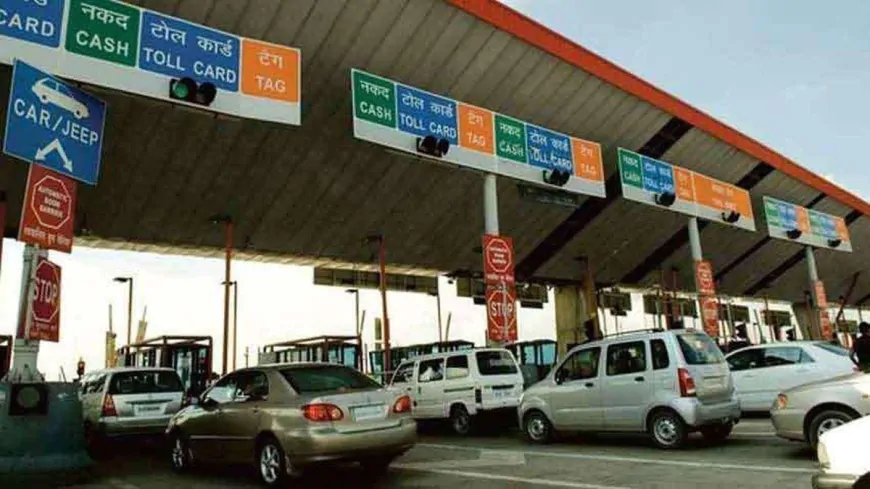
A major structural shift is planned in the way tolls are collected on national highways. The ministry is moving towards seamless, barrier-free tolling using a combination of Automatic Number Plate Recognition (ANPR) cameras, artificial intelligence-based analytics and RFID-enabled FASTag technology. Vehicles will be charged automatically without stopping at toll plazas.

Road Transport Minister Nitin Gadkari has said toll collection costs could drop dramatically, from around 15% of total collections to nearly 3%. On annual toll revenues of ₹50,000–60,000 crore, this could translate into savings of up to ₹8,000 crore, while also reducing congestion, fuel wastage and waiting times at plazas. Violations will trigger electronic notices, with penalties linked to FASTag and VAHAN databases.

“We plan to put up several seamless barrier-free tolling systems on national highways across the country. Initially, we have come out with 10 tenders for that. The cost of tolling will significantly come down from around 15 per cent currently to 3 per cent of the total toll collection. “For instance, on a toll collection of INR 50,000-60,000 crore in a year, savings could go up to INR 8,000 crore in a year. Besides, it will also plug the loopholes and reduce waiting time on toll plazas,” Gadkari told PTI in an interview.

Road Safety Bill revived amid grim data

Despite rapid highway expansion, road safety remains a stubborn and deeply worrying challenge. The ministry is preparing a fresh Road Safety Bill after earlier versions failed to clear Parliament. India records nearly five lakh road accidents annually, with about two-thirds of fatalities occurring in the 18–34 age group.

Gadkari has described the situation as “terrible,” admitting that efforts so far have not delivered the desired results. The proposed legislation is expected to focus on stricter enforcement, clearer accountability, safer road engineering standards and harsher penalties for violations.

Gadkari said the government has made efforts to reduce fatalities by improving road engineering, making enforcement of laws stricter, and increasing penalties in case of traffic violations. “In our country, there are 5 lakh road accidents annually, causing around 1.8 lakh deaths,” he said, adding that around 66 per cent of the deaths are in the age group of 18-34.

“This is terrible. We are trying hard (to reduce fatalities), but we have not been successful,” Gadkari, known to speak his mind, said. The number of road accident fatalities in India went up by 2.3 per cent to over 1.77 lakh in 2024, resulting in the death of 485 persons every day. The minister said that in 2025-26, the highways ministry expects to award road projects worth 12,000 km. “In the next financial year (2026-27), we will aim to award highway projects worth 13,000-13,500 km,” he added.

Investments, tunnels and challenges ahead

Looking ahead, the government plans to accelerate project awards, targeting 12,000 km of highway projects in 2025–26 and up to 13,500 km in 2026–27. A Public Infrastructure Investment Trust (InvIT) will be launched to monetise national highway assets and attract long-term retail and domestic investment.

Strategic projects are also nearing completion, including the 13-km Zojila tunnel, set to open in April 2026, which will provide all-weather connectivity between Srinagar and Leh and cut travel time to just 20 minutes. However, challenges persist, with hundreds of highway projects delayed due to land acquisition issues, environmental clearances and contractor-related hurdles, underscoring the scale of reforms still needed.

Long or Short, get news the way you like. No ads. No redirections. Download Newspin and Stay Alert, The CSR Journal Mobile app, for fast, crisp, clean updates.

App Store – https://apps.apple.com/in/app/newspin/id6746449540

Google Play Store – https://play.google.com/store/apps/details?id=com.inventifweb.newspin&pcampaignid=web_share

Latest News

Popular Videos
