


Japan’s MMX Moon Mission Set to Launch on October 20
The CSR Journal Magazine

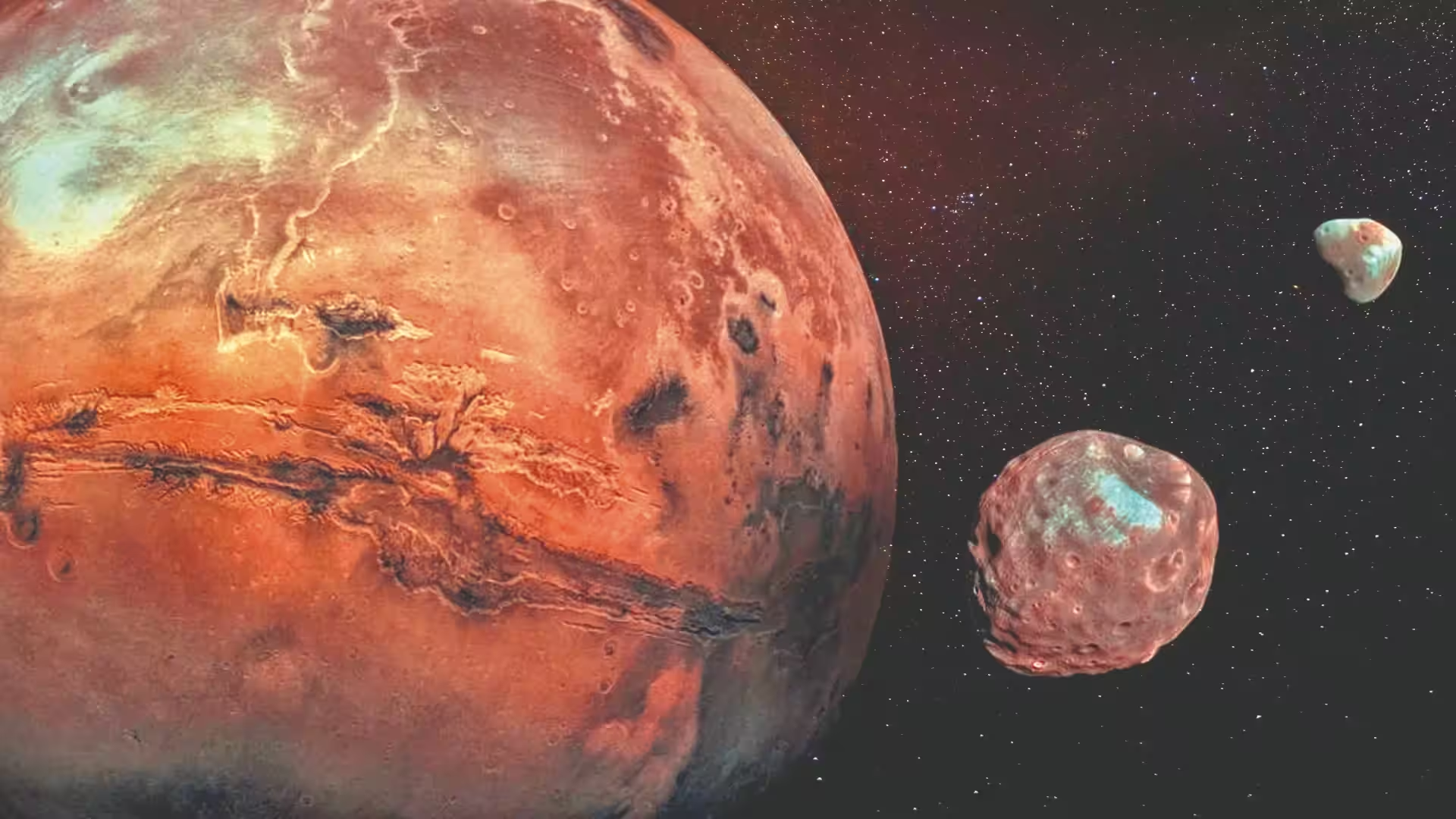
A Japanese space mission is scheduled to launch on October 20, aiming to collect samples from Phobos, one of Mars’ moons, and return them to Earth for scientific study. This mission, led by the Japan Aerospace Exploration Agency (JAXA), will mark a historic achievement if successful, as it will be the first instance of material from Mars or its moons being brought back to Earth. The Mars Moons Exploration (MMX) mission is projected to arrive in the Martian vicinity by August 2027.

The primary goal of the MMX mission is to investigate the origins of Phobos and its counterpart, Deimos. While en route to Mars, the spacecraft will conduct studies on Deimos before focusing on Phobos. A small rover will be deployed to explore the rocky surface of Phobos and assist in identifying a suitable landing site for the main spacecraft.

According to Russell, a key figure involved in the mission, landing a rover on such a small moon presents unique challenges due to the competing gravitational forces. This makes it difficult to secure a safe landing. The rover will conduct a thorough survey of the terrain, which will inform the subsequent descent of the main spacecraft.

Sample Collection and Return Plans

Once the rover has completed its survey, the main spacecraft will descend onto Phobos. It will utilise a robotic arm equipped with two sampling devices to collect approximately 10 grams of lunar dust from the surface. This material will be sealed in a capsule for transport back to Earth, with the return scheduled for 2031. The capsule is expected to land in the Woomera region of South Australia.

The collected samples will provide invaluable insights into the composition of Phobos. Scientists are particularly interested in the chemical and mineral makeup of the samples, as this data could help clarify the origins of Mars’ moons. The mission aims to address two prevailing theories regarding their formation: one suggesting that a massive object collided with Mars, while the other posits that Phobos and Deimos were originally asteroids captured by Mars’ gravitational field.

Russell noted that the analysis of the returned samples will allow researchers to differentiate between these two hypotheses. Detailed examination of the chemistry and mineral composition will yield distinct results, thus advancing the understanding of how Mars acquired its moons.

Significance of the Mission

The MMX mission represents a significant advancement in planetary science, particularly in the study of Mars and its moons. Scientists have long sought to obtain samples directly from Mars and its surroundings, as laboratory analyses can reveal information that spacecraft instruments may not conclusively establish. The mission’s findings could contribute to broader knowledge about the Solar System’s formation and the processes that govern celestial bodies.

The spacecraft is set to launch from Japan’s Tanegashima Space Center at 4:41 am local time on October 20. This mission not only highlights Japan’s capabilities in space exploration but also underscores the global interest in Mars and its moons. As the mission progresses, it is expected to foster international collaboration in the field of planetary science.

In conclusion, the MMX mission aims to achieve unprecedented milestones in space exploration by collecting samples from Phobos and returning them to Earth. Its success could provide crucial insights into the origins of Mars’ moons and enhance our understanding of planetary formation within the Solar System.

Long or Short, get news the way you like. No ads. No redirections. Download Newspin and Stay Alert, The CSR Journal Mobile app, for fast, crisp, clean updates!

App Store – https://apps.apple.com/in/app/newspin/id6746449540

Google Play Store – https://play.google.com/store/apps/details?id=com.inventifweb.newspin&pcampaignid=web_share

Latest News

Popular Videos
