


AI Strengthens Defences Against AI-Driven Attacks
The CSR Journal Magazine

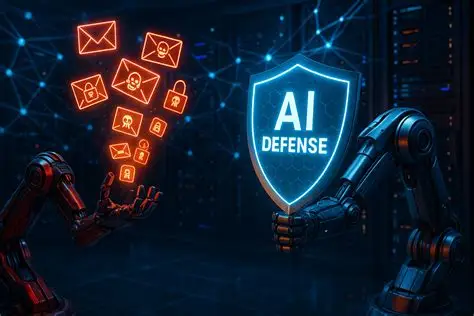
The landscape of cyber threats has undergone significant changes due to advancements in artificial intelligence (AI). A few years ago, crafting a convincing phishing email required considerable skill and knowledge about the target. However, with the advent of large language models, such emails can now be generated almost instantaneously by anyone with basic access to online resources. This automation has expanded the scale and reach of phishing attacks, making them more prevalent than ever.

Despite the evolution in tactics, the core principles of phishing remain unchanged. Deception and social engineering continue to exploit trust, while credential theft remains a primary method for breaching enterprise security. The economic implications of these developments are profound, as the volume of credential abuse has escalated, necessitating a shift in how organisations approach cybersecurity.

Recent statistics indicate that a staggering 94 per cent of all login attempts observed over the past year originated from automated systems rather than human users. Furthermore, of the human logins that did occur, 63 per cent involved credentials that had been compromised in previous breaches. This trend highlights a structural issue within the credential security framework that cannot be resolved solely through traditional authentication measures.

Impact on Sensitive Sectors

In sectors such as financial services, healthcare, and government in India, the stakes are considerably higher. Employees in these industries handle sensitive data and are subject to stringent regulations under the Digital Personal Data Protection Act. A single successful credential compromise can lead to severe consequences, making it imperative for organisations to adapt their security measures accordingly.

The sophistication of social engineering tactics has also increased. Previously, attackers needed to gather information about an organisation’s structure and communication style, a process that required time and expertise. Now, large language models enable attackers to conduct this research in mere moments, allowing them to create highly convincing impersonations. For instance, business email compromise attempts have shown that attackers often request amounts just below the approval threshold for wire transfers, exploiting procedural vulnerabilities rather than technical ones.

To mitigate these risks, organisations are encouraged to implement multi-channel verification processes. Email should not be the sole mechanism for approving sensitive transactions. By requiring confirmation through a separate, trusted communication channel, organisations can significantly reduce the likelihood of falling victim to such attacks.

Leveraging AI for Defence

AI can also play a crucial role in enhancing security measures. By employing AI to screen incoming emails for specific indicators of phishing attempts, organisations can reduce the volume of social engineering attacks that reach employees. Key indicators include the urgency of the message, requests for immediate action, and deviations from the sender’s usual communication patterns. While none of these indicators alone can confirm malicious intent, together they provide a basis for further investigation.

Beyond workplace applications, individuals and families can also benefit from adopting simple habits to protect themselves from scams. These include being wary of urgent requests for personal information, avoiding unfamiliar links, and verifying unusual messages through trusted channels. Such practices can help mitigate the risks posed by increasingly sophisticated scams targeting the general public.

AI’s capabilities extend beyond being a tool for attackers; they also offer significant advantages for defence. Behavioural AI models can learn to identify normal activity patterns for users and systems, enabling the detection of anomalies that static rules might overlook. For instance, if an employee’s account accesses systems at unusual times or from unexpected locations, this could indicate a potential security breach.

To strengthen defences against AI-driven attacks, technology and business leaders should focus on three key areas: identity architecture, process hardening for high-risk transactions, and behavioural visibility across the technology environment. By addressing these fundamental vulnerabilities, organisations can enhance their ability to detect and respond to AI-enhanced attacks, ultimately improving their overall security posture.

Long or Short, get news the way you like. No ads. No redirections. Download Newspin and Stay Alert, The CSR Journal Mobile app, for fast, crisp, clean updates!

App Store – https://apps.apple.com/in/app/newspin/id6746449540

Google Play Store – https://play.google.com/store/apps/details?id=com.inventifweb.newspin&pcampaignid=web_share

Latest News

Popular Videos
